It’s a fair question to ask. I often channel what I call people’s Higher Self. It’s the source of much of the guidance I provide people every day. But it’s not necessarily a concept that’s all that common or clear in many mainstream religions, and even the modern spiritual world. So let me explain myself.
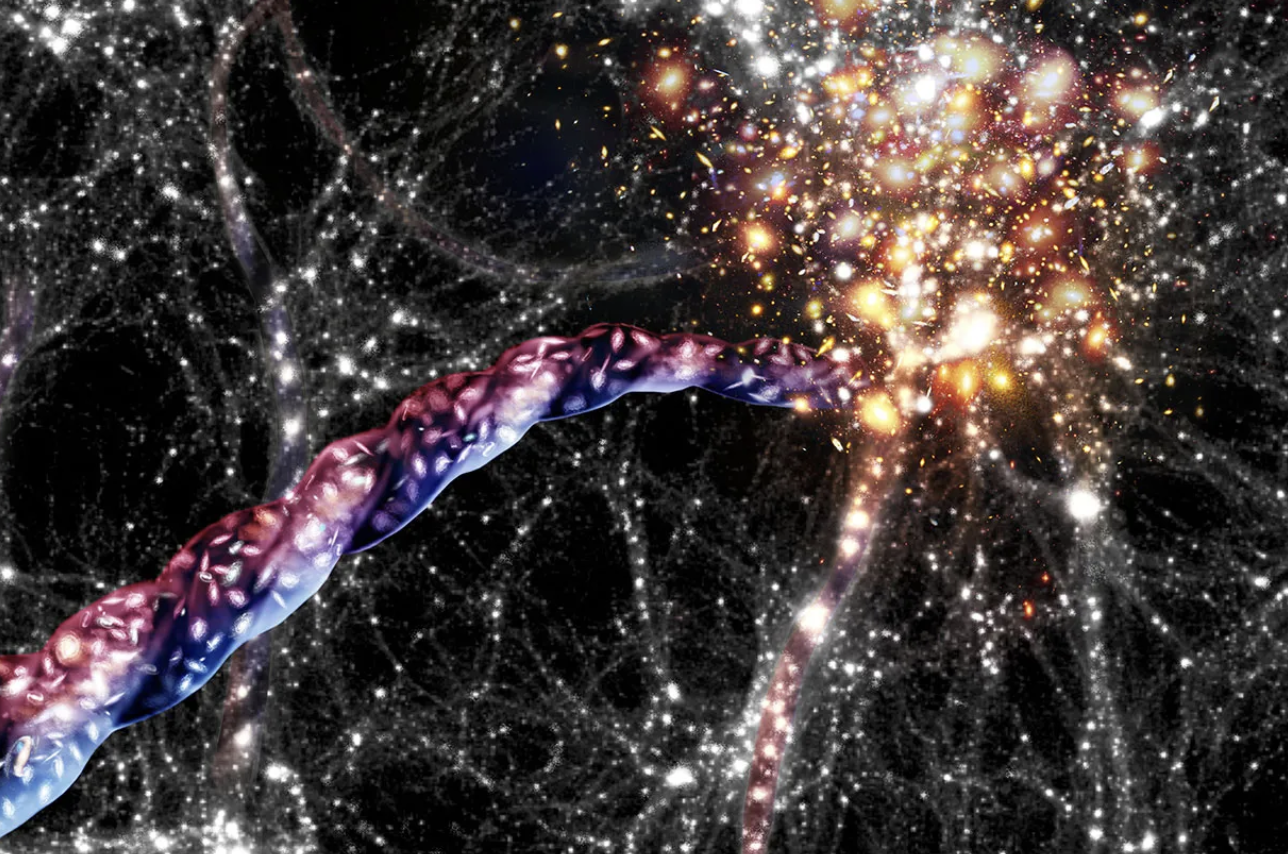
I started connecting with the notion of our ‘Higher Self’ on ayahuasca, where I first encountered my own on many occasions. Supported by the energy of the medicine, it was easy and very natural to experience my consciousness as something far beyond ‘Natalie’ – something formless and timeless. I remember an image I was shown of a kind of cosmic double helix spinning through space. Enormous. The size of galaxies, like a giant cosmic filament. Each of what would typically be bases on a DNA strand representing a different lifetime. I heard my voice dub over that image “I’ve lived so many lives”. And I felt a sense of the vastness of the intelligence that holds all that. Not God, or Source, or anything like that. That’s much bigger still. Me. Just, very, very big me. But also no further away than right here. And that’s how I am when I’m taking a moment to breathe, center myself, and just to ‘be’.
The frame I'm working with
I believe, and so far in my experience I’ve found, that we all have this. But I’d like to explain it in a frame that isn’t mine. So I’ll walk you through how other cultures have held the question. But let me first just be clear that when I say "Higher Self," I'm not talking about the ultimate. I'm not talking about God, or Source, or the ground of all being. That's bigger than this. When I do a reading about your ex-boyfriend I’m not channeling God. What I'm describing is the layer between your everyday ego — the personality, the name, the story — and that ultimate. It's the part of you that sees what’s going on across all lifetimes simultaneously, that has your back in a deeply personal way, that's already in relationship with the whole, and that already knows, that's been here through all of it. It's the "very, very big me" I described.
How I experience that isn’t overt. It’s not like I’m actually picturing myself talking to a giant version of you in the sky. It feels like a ‘field’ of energy. A weather system. And it talks to me in a way like you might sense just before it’s about to rain. The information comes through like that, and it comes through from there because that’s the specific muscle I’ve trained over however many readings. Through intention to work that way. Along with your guides, I find it most useful, and most reliable.
So yeah, this is a three-layer model: the ego self, the Higher Self, and the ultimate (God, Source, Brahman, whatever you call it). The Higher Self is the intermediary. The bridge. The part of you that's already awake but hasn't fully expressed it yet. And once you see that frame, it’s easy to see it in traditions that don't use the word "Higher Self" at all.
The traditions
Hinduism (Advaita Vedanta)
The Upanishads put the ultimate most bluntly: Tat Tvam Asi. "You are That." The Ātman is Brahman. But that's the end point, not the intermediary. The intermediary is the jīvatman — the individual soul, the spark of Brahman that's still wrapped in the layers of ego and identity. It's you, but not yet fully recognized as Brahman. It's the "big me" before it realizes it's the biggest. The work of the Upanishads is to see through the jīvatman to the Brahman behind it. The jīvatman is the Higher Self in this frame: the layer that's already divine but hasn't yet dropped the last bit of "I."
The British philosopher Paul Brunton, who spent most of his life in India and wrote extensively on what he called the Overself, made this cut explicitly.
"What is really attained is the higher self, the ray of the divine sun reflected in man — God Himself being forever utterly beyond man's finite capacity to comprehend. The goal of the life is union with the middle layer. Full union with the top layer is either impossible without annihilation, or at best a penultimate stage that then looks up to something still higher.”
Sufism
The Sufi map is more layered. The nafs is the ego. The qalb is the heart — the seat of spiritual intuition, the organ that can perceive the divine. The ruh is the spirit. But the one that fits my frame most precisely is the Insān al-Kāmil — the Complete Person. Not God. Not the ego. The self that has been refined to the point where it's a perfect mirror: the point through which God sees creation and creation sees God. It's the intermediary par excellence. The station between. Ibn ʿArabī called it "the station of no station" — perfection achieved only by those who refuse to define the self in fixed terms. You don't become God. You become the perfect conduit.
Christianity
The Christian mystical tradition doesn't have a clean single term for this, but the closest is the ‘Christ within’ — the indwelling Logos. Paul writes that "all things were made through him, and without him was not any thing made" (Colossians 1:16). The Logos is the eternal intermediary: the Word through which the infinite expresses itself, and the point at which the human meets the divine. In the mystical tradition, the "Christ consciousness" is the state where you're operating from that intermediary point — not as God, not as the small self, but as the one who's been united with the Word. Meister Eckhart's "ground of the soul" is the point where this happens. Theosis is the process. The Christ within is the state you're moving toward. It's the intermediary made flesh.
Buddhism
Ostensibly the radical outlier, but not by much. The doctrine of anattā denies any permanent self — no ego, no Higher Self, no ultimate self. Just the five aggregates, all impermanent. But the Mahayana and Vajrayana traditions introduced ‘Buddha-nature’ (tathāgatagarbha) — the "womb of the thus-gone one." The innate potential for awakening present in all beings. It's not the ego. It's not nirvana or emptiness (the ultimate). It's the seed — the part of you that's already awake but hasn't fully expressed it yet. It's the intermediary: the layer that, when realized, becomes full awakening. You don't become a Buddha. You recognize that you were always one, and the intermediary layer was the bridge between the sleeping self and the awakened one.
Kabbalah
The soul has layers, and the neshamah — the highest, the divine breath — is the intermediary. It's the point where the individual connects to the Ein Sof (the infinite) without being the Ein Sof. In Lurianic Kabbalah, the shattering of the vessels scattered divine light into the material world, and human action participates in tikkun — the repair. The neshamah is the fragment of that light still burning in you. It's not God. It's the part of God that's you. The bridge between the finite and the infinite.
Golden Dawn / Thelema
This one fits almost too neatly. The ‘Holy Guardian Angel’ is explicitly framed as a "facet of divinity that exists within each individual, beyond the personality." It's not God. It's not your ego. It's the intermediary — the point of contact between the small self and the divine. Crowley called it the ‘Silent Self.’ The work is to make contact with it, to strip away the noise until you can hear it clearly. You don't build it. You don't become it. You tune into it. It's the bridge, and it's already there.
Gnosticism
The pneuma — the divine spark — is a fragment of the Pleroma (the divine fullness) trapped in the material body. It's not the Pleroma itself. It's the piece of the infinite that's you. The work isn't to become the Pleroma. It's gnosis — recognition. You realize the spark is already there, already in relationship with the fullness, already the bridge between the material and the divine. You just have to see it.
Jung
The Self (capital S) is "not only the centre but also the whole circumference which embraces both conscious and unconscious." It's distinct from the ego (the small self) but also distinct from the transcendent — Jung was careful to separate the Self from God. The Self is the totality of the psyche, the union of all opposites. It's the intermediary: the layer that holds the ego and the numinous in relationship. The process of moving toward it is individuation. Jung's warning was against identifying with it — the danger is egoic inflation, mistaking the bridge for the destination.
Steiner (Anthroposophy)
This one is the most explicit about the layering. The human being has seven "members," from the physical body up through the astral body, the ego, the Higher Self, the Spirit Self, the Life Spirit, and finally Spirit Man. The Higher Self is the fourth. It's not the ego. It's not the ultimate. It's the first level at which you can perceive the spiritual world directly. It has to be actualized — not just believed in. It's the intermediary made anatomical, in a sense. A specific layer of you that sits between the personal and the transcendent.
Psychosynthesis (Assagioli)
The Self is an "ontological reality" — a stable center or core of life. The personal self (the everyday "I") is merely a reflection of this deeper Self. The work is to re-center your identity from the personal ego to that deeper center. The Self is the intermediary: the part of you that's bigger than the personality but not bigger than the universe. The bridge you stand on when you're not in the personality.
Discrepancies
Some of these traditions fit almost exactly, some a little less. Some traditions frame the Higher Self as a genuinely separate entity — Crowley in his later writings insisted the HGA is "not the Higher Self but an Objective individual," a distinct presence you make contact with. The Golden Dawn's language leans that way too. That doesn’t mean the Higher Self doesn’t exist, however, just that the HGA is something else.
Some traditions emphasise the embodied aspect of this Self. Others less so. The thing is, at these subtle levels much of it is to do with how you’re choosing to use language, what your spiritual ‘goal’ is, and which perspective you’re emphasising. I think much of the variety comes more down to that. If you asked a bunch of different people to describe pizza they’d all use slightly different words as well. For example, it depends on which "you" you mean. If "you" is the personality — the name, the story, the barista-annoyance, the ego that's been running the show since you were about five — then yeah, your Higher Self is not that. It's something else. If "you" is the consciousness that was made visible during an ayahuasca trip — then it's not separate from you at all. It's just you, unobscured.
What the modern spiritual world does with it
The modern spiritual world — and I mean the credible end of it, not the "your Higher Self is your spiritual CEO" end — tends to land somewhere in the middle. Jung's Self is the totality of the psyche, the center and circumference, the union of all opposites. Psychosynthesis calls the Self an "ontological reality" and the work is to re-center your identity from the personal ego to that deeper center. I really resonate with that.
Steiner gets more specific. The Higher Self is one of several "higher members" of the human being, and it has to be actualised to enable conscious perception of the spiritual world. I agree with that too. It’s from that consciousness that deeper insights come. But I don’t think you have to actualise it in one whole go. It’s not a switch. It’s just, sometimes you’re coming more from that place, sometimes you’re not. And the more spiritual work you do the more you get to access that.
What I actually work with
I don’t think about any of that stuff when I channel, though. All I know is, I can tap into something that feels like the person but has a wider perspective and is able to help guide in a way that feels in deep alignment with what they actually need rather than what they think they need.
That’s a tough job because the two are often very much in conflict. I have you on one end of the phone wanting to know all the answers and your Higher Self being like, “hell no, she’s gotta learn who she is first”. The pushback I get from clients is a real cost of the job I have to take on the chin ten times a day. Sigh. That’s my life.
But yeah, I think the reason it goes by so many names across so many traditions is that everyone's pointing at the same layer from a different angle. The jīvatman. The Insān al-Kāmil. The Christ within. Buddha-nature. The neshamah. The Holy Guardian Angel. The pneuma. The Self. They're all describing the same thing.
The name doesn’t really matter. The point is we all have one, it’s bloody useful to listen to it, and one day, we might truly realise we’re already that.